At MAS, we consider our stakeholders to be core partners who enable us to deliver on our Plan for Change. We recognise that long-term value creation depends on maintaining strong, transparent relationships across our ecosystem.
Our stakeholders both influence, and are influenced by our operations and value chain. As an active participant within this ecosystem, we engage with them in a structured and consistent manner, supporting stronger relationships, shared progress, and alignment with our long-term priorities.
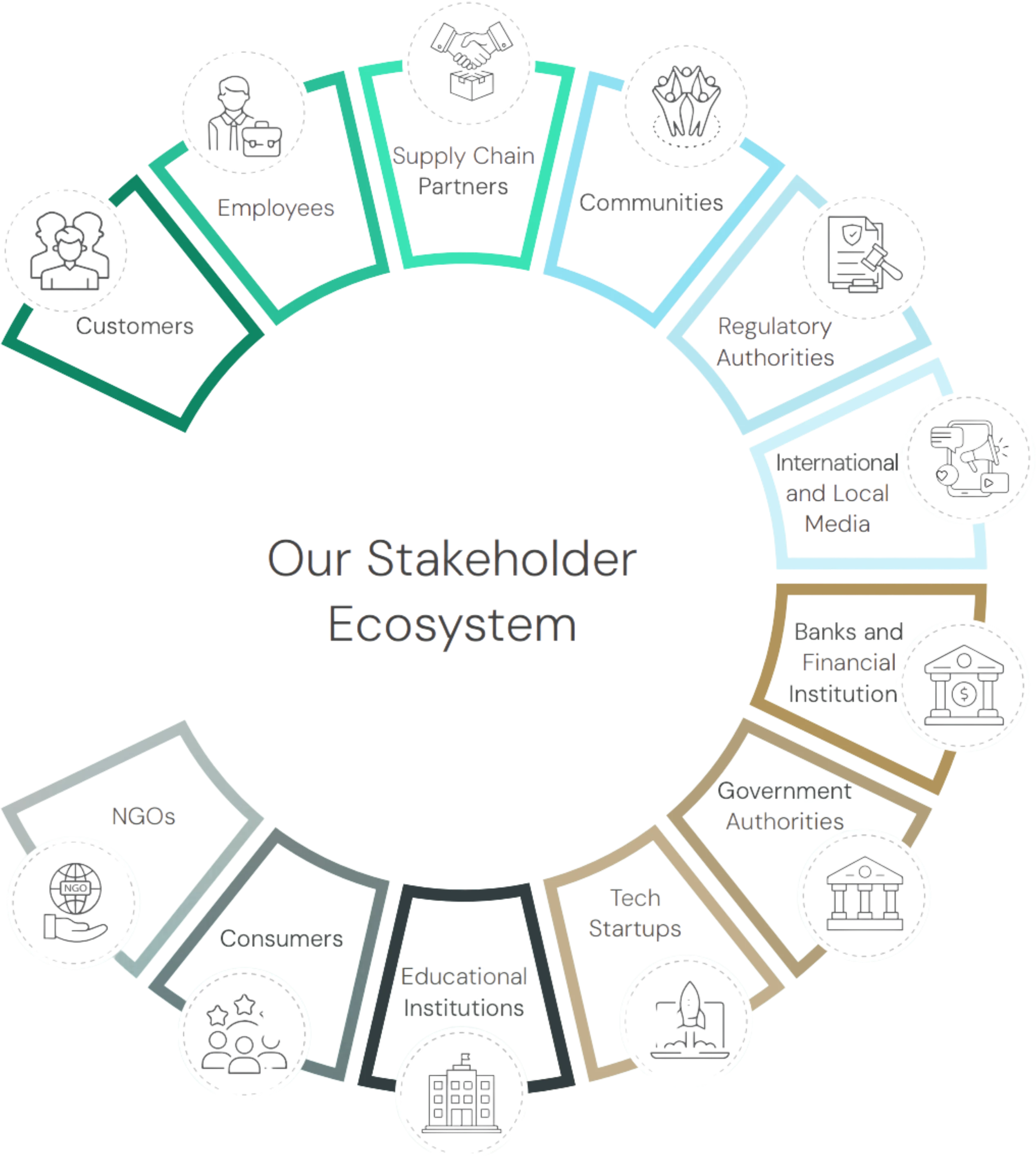
During the year, we expanded our stakeholder framework to reflect evolving engagement dynamics, including the formal recognition of educational institutions and tech startups, a clearer distinction of government authorities, and the repositioning of suppliers as supply chain partners.
Stakeholder Engagement Process
Our approach to stakeholder engagement is guided by a structured process that is shaped by our business activities and operating environment. This supports consistent and well-defined engagement across our value chain and wider ecosystem.

Map stakeholders across the value chain and wider ecosystem, based on our business model, operations, and operating environment.

Consider the business model and value chain, operating landscape, and relevant industry standards and regulatory requirements.

Apply an impact-influence matrix to identify stakeholders significantly affected by our operations and those who can influence the business.

Implement proactive engagement through formal and informal interactions across different levels of the organisation.

Define engagement channels, frequency of engagement, and level of interaction.

Identify priority stakeholder groups based on the outcome of the assessment.
Map stakeholders across the value chain and wider ecosystem, based on our business model, operations, and operating environment.
Consider the business model and value chain, operating landscape, and relevant industry standards and regulatory requirements.
Apply an impact-influence matrix to identify stakeholders significantly affected by our operations and those who can influence the business.
Identify priority stakeholder groups based on the outcome of the assessment.
Define engagement channels, frequency of engagement, and level of interaction.
Implement proactive engagement through formal and informal interactions across different levels of the organisation.
How We Engage with Our Stakeholders
The table below summarises our stakeholder groups, engagement mechanisms, focus areas, and frequency of engagement.

CORE VALUE CHAIN
 Customers
Engagement
- Vendor summits and roadshows
- Customer feedback surveys
- Strategic engagement sessions
- In-person engagement through customer-facing teams
- Meetings, calls, and written correspondence
- Product and design collaboration reviews
Focus Areas
- Strategic business partnerships and alignment
- Raw material and product innovation
- Digitalisation and technology integration
- Product development, sourcing, and manufacturing capabilities
- Risk mitigation and production resilience
- Sustainable product and environmental initiatives
Frequency
Ongoing / Project-based Monthly, Quarterly, Biannually, Annually
Relevant Sections
 Employees
Engagement
- Organisational Health Index and employee surveys
- Quarterly town halls and engagement forums
- Performance reviews and feedback mechanisms
- Leadership engagement platforms and committee structures
- Internal communication platforms and channels
- Grievance and support mechanisms
Focus Areas
- Workplace balance and flexible working practices
- Safety, wellbeing, and diversity & inclusion
- Community and volunteer initiatives
- Career development and capability building
- Learning and development opportunities
- Employee concerns and grievances
Frequency
Ongoing, Monthly, Quarterly, Biannually, Annually
Relevant Sections
 Supply Chain Partners
Engagement
- Supplier audits and third-party assessments
- Management and supplier review meetings
- Collaboration forums and onboarding sessions
- Supplier production and quality reviews
Focus Areas
- Long-term partnership development
- Compliance with contractual and sustainability requirements
- Supply chain resilience and performance
- Responsible sourcing and environmental practices
Frequency
Ongoing / Routine Monthly, Biannually, Annually
Relevant Sections
ENABLING ECOSYSTEM
 Regulatory Authorities
Engagement
- Certifications, audits, and compliance reviews
- Licensing, approvals, and regulatory submissions
- System certification processes
Focus Areas
- Compliance with legal, regulatory, and environmental requirements
- Operational standards and reporting obligations
- Environmental and social compliance
Frequency
Ongoing / As required
Relevant Sections
 Government Authorities
Engagement
- System and audit reviews
- MoUs and public–private partnerships
- Policy forums and advisory platforms
- Direct licensing and regulatory engagement
Focus Areas
- Labour and welfare (minimum wage, EPF/ETF, OHS standards)
- Environmental stewardship (wastewater, hazardous waste, national targets)
- Trade and investment (export duties, FTAs, industrial zones)
- Social development (childcare, disability inclusion)
- Sustainable Education
Frequency
Ongoing, Daily / monthly, Periodic, Quarterly / Annual, Ad-hoc, As Required
Relevant Sections
 Banks and Financial Institutions
Engagement
- Performance reviews and investor meetings
- Annual audited accounts and disclosures
- Meetings, calls, and ongoing correspondence
Focus Areas
- Financial performance and capital management
- Investment strategy and funding requirements
- Risk management and compliance
- Economic outlook and financial stability
Frequency
Ongoing Quarterly, Biannually, Annually
Relevant Sections
EXTERNAL STAKEHOLDERS
 International and Local Media
Engagement
- Media releases and digital platforms
- Public relations and leadership forums
- Engagement campaigns and communications
Focus Areas
- Corporate updates and announcements
- Industry insights and thought leadership
- Brand reputation and public perception
- Sustainability and CSR initiatives
Frequency
Regular / As required
Relevant Sections
 NGOs
NGOsEngagement
- Partnership engagements and feedback mechanisms
- Forums on social and environmental topics
- Collaborative initiatives and programmes
Focus Areas
- Community and environmental issues
- Industry sustainability practices
- Partnership opportunities
- Social and environmental impact
Frequency
Ongoing / Project-based
Relevant Sections
 Consumers
Engagement
- Product testing and feedback through customer brands
Focus Areas
- Product safety and responsible use
- Consumer expectations and product performance
Frequency
Project-based
Relevant Sections
 Educational Institutions
Engagement
- MoUs and academic partnerships
- “Eco Go Beyond” school programme
- Internship programmes
- University career fairs
- Research collaborations
Focus Areas
- Curriculum alignment with industry needs
- Sustainability and climate education
- Research and development in textile technologies
- Talent pipeline and recruitment
Frequency
Ongoing for schools, Semester-based for universities
Relevant Sections
 Tech Startups
Engagement
- Innovation partnerships and co-development projects
- Proof-of-concept (POC) trials and pilot implementations
- Startup accelerator/incubator collaborations
- Technology scouting and open innovation platforms
- Joint problem-solving workshops
Focus Areas
- Circularity-enabling technologies (textile recycling)
- Material innovation and sustainability-linked technologies
- Environmental technology solutions (waste reduction, circularity tools, water/energy optimisation)
- Traceability and supply-chain transparency systems
Frequency
Ongoing / Project-based
Relevant Sections